

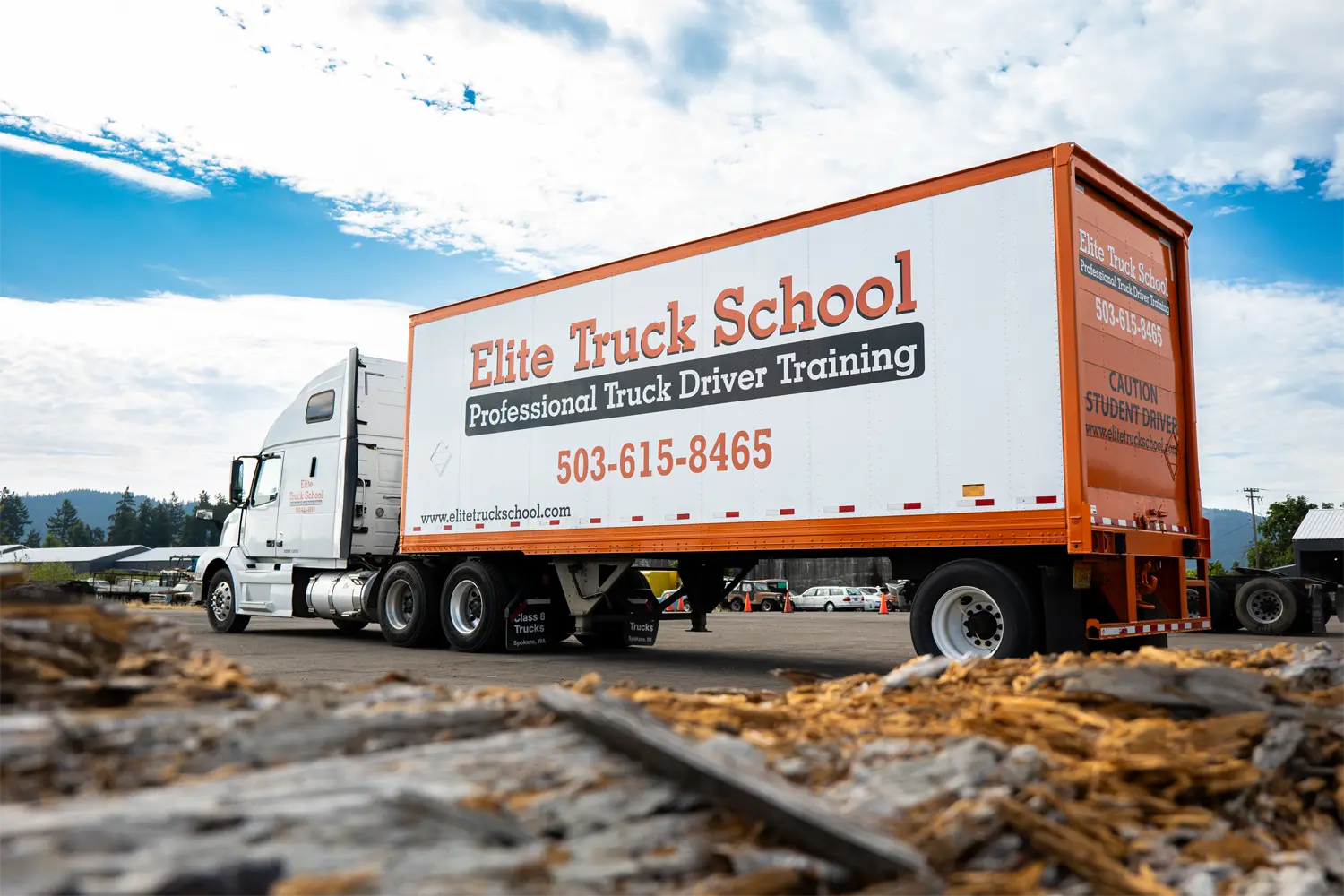
The CDL skills test is the last hurdle between a student and a commercial driver’s license. It has three parts: a vehicle inspection, a basic control skills test, and a road test. Students must pass all three to earn their CDL. The test is how the state confirms a new driver can inspect, control, and drive an 80,000-pound truck safely before sharing the road with everyone else
Many new drivers feel nervous about test day because they don’t know what to expect. Knowing the requirements and the format ahead of time can take much of that stress away. The skills test comes near the end of the CDL process, after the permit, the DOT physical, and entry-level training are complete.
When Can a Student Take the CDL Skills Test?
A student can take the skills test once they meet all state and federal requirements. Each one must be in place before the test can be scheduled. The three main requirements are:
- Hold a CLP for at least 14 days. The commercial learner’s permit (CLP) lets a student practice driving a truck with a qualified driver. In these 14 days, most students enroll in and begin taking an ELDT course.
- Finish Entry-Level Driver Training (ELDT). Federal rules require ELDT before a first-time Class A or Class B skills test. The school that a student trains in reports their course completion to the federal Training Provider Registry.
- Have a current DOT medical card. Every CDL applicant must pass a DOT physical and have the results on their state driving record.
Students also need a valid regular driver’s license from their home state. Before training, students should be aware of all Oregon CDL requirements and Washington CDL requirements.
Part 1: The Vehicle Inspection
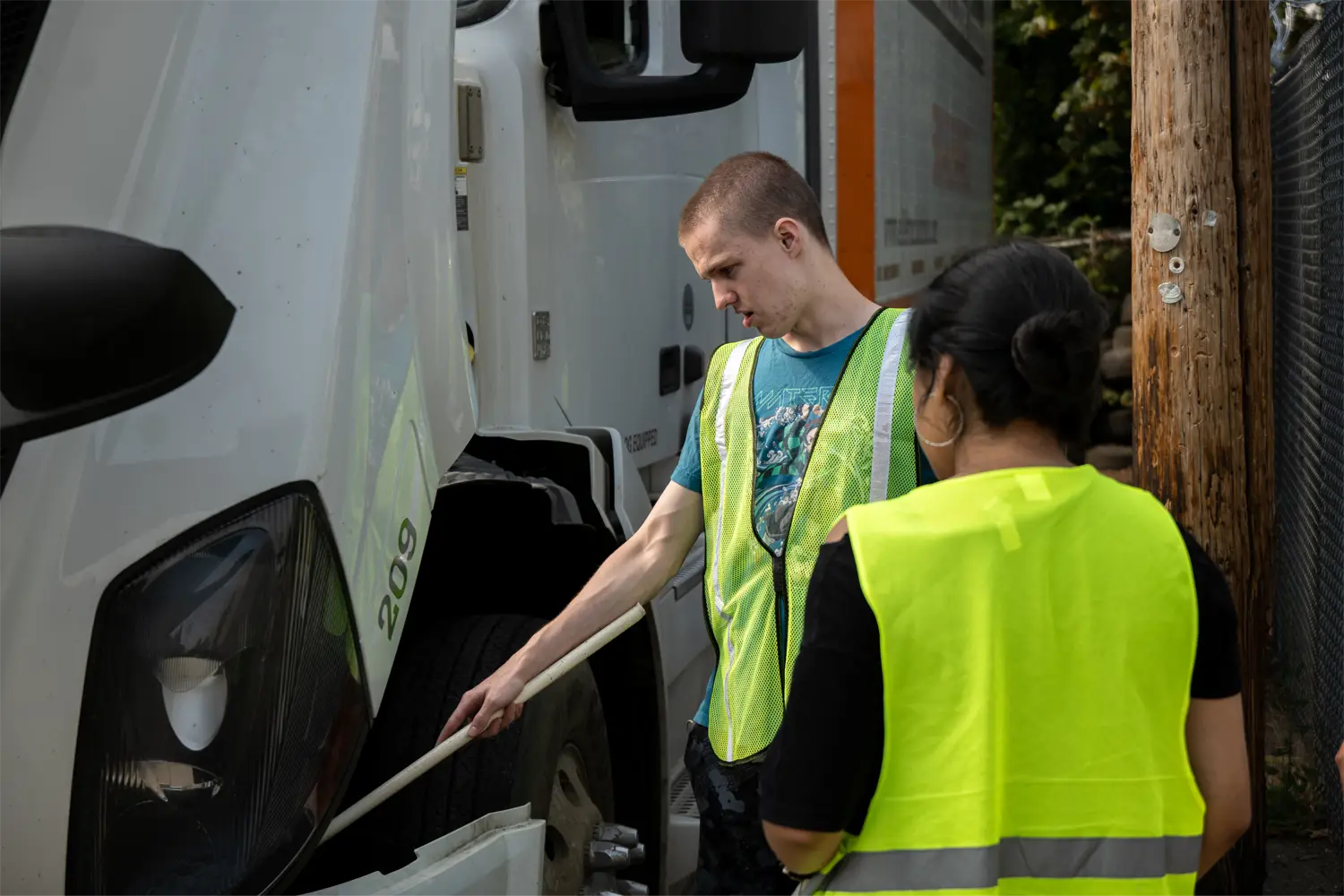
The vehicle inspection, also called the pre-trip inspection, always comes first. The student walks around the truck and points out key parts. For each part, they explain what they are checking and why it matters for safety.
The examiner may ask about parts in several areas of the truck:
- The engine compartment, such as fluid levels, belts, and hoses
- The cab, including gauges, mirrors, horn, and safety equipment
- The lights, tires, wheels, and suspension
- The brakes, including an in-cab air brake check
- The coupling system that connects the tractor to the trailer
This part tests memory as much as skill. Students practice it over and over during training until they can explain each item in the right order.
Part 2: Basic Control Skills
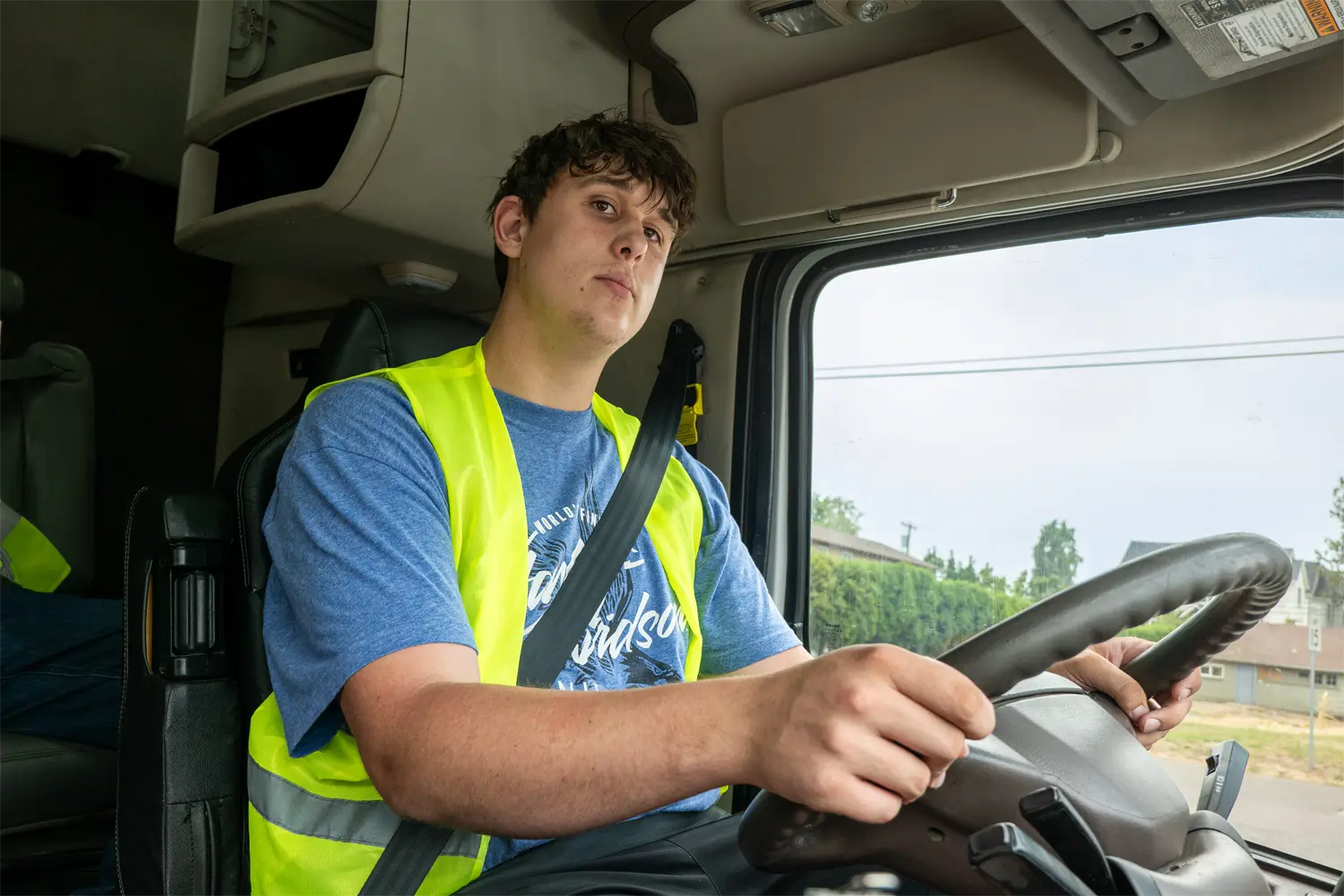
The basic control skills test checks how well a student can move the truck at low speed in a tight space. It takes place on a marked course, away from traffic. The examiner picks a few backing exercises from a set list, such as:
- Straight-line backing: backing the truck in a straight line between two rows of cones
- Offset backing: backing into a lane to the left or right of the starting lane
- Parallel parking: backing into a space next to the truck, on either side
- Alley dock: backing the trailer into a space at a 90-degree angle, like backing up to a loading dock
Students lose points for touching a boundary line or cone, or for stopping to get out and look too many times. Students may get out of the truck to look, but only a limited number of times. In ELDT like Elite’s, students practice all of these control skills long before the test.
Part 3: The Road Test
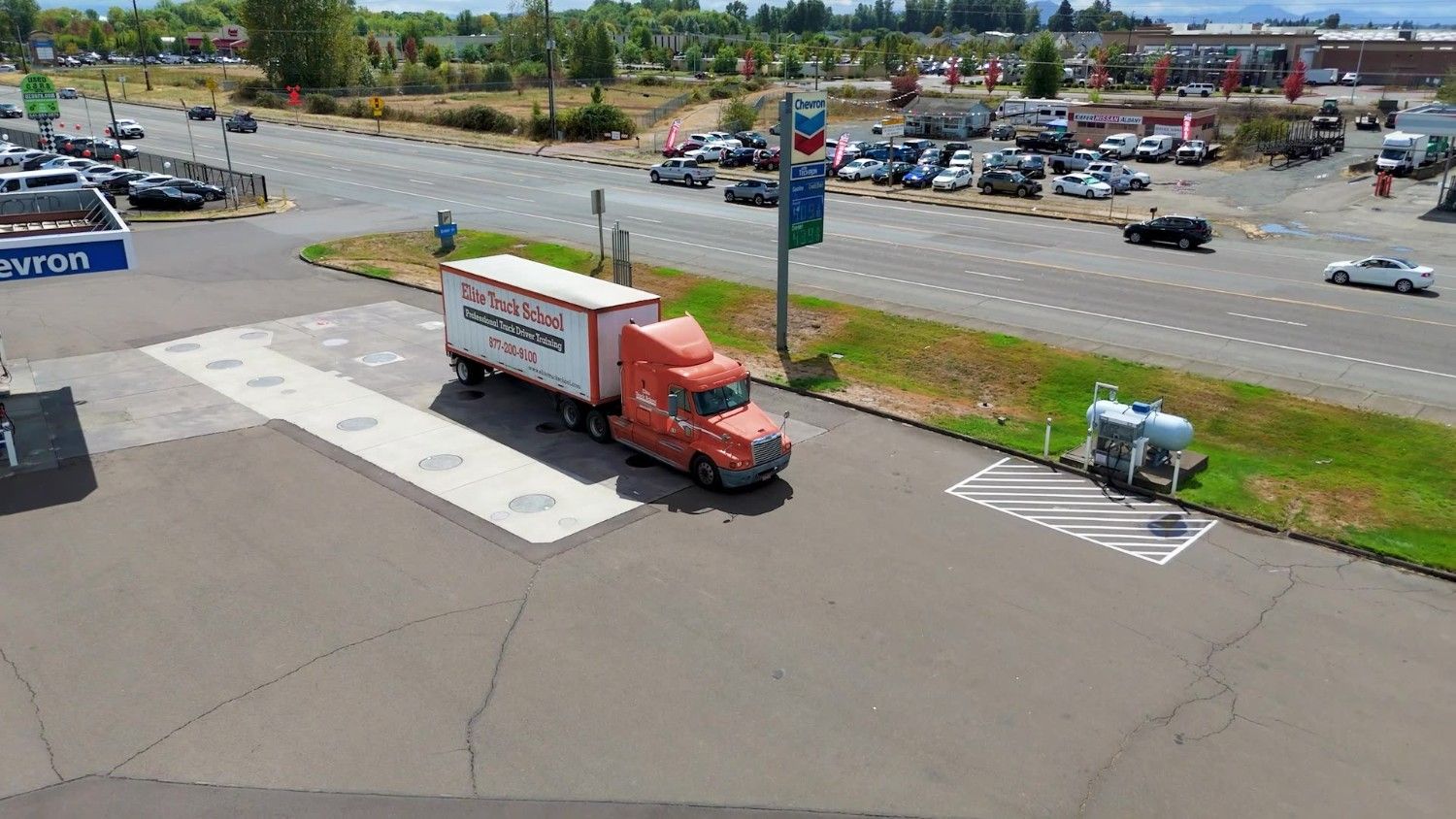
The road test shows whether a student can drive the truck safely in real traffic. The examiner rides along and gives directions on a set route. The route covers a mix of driving situations, including:
- Left and right turns
- Intersections
- Railroad crossings
- Curves
- Single-lane and multi-lane roads
- Highways, including merging and lane changes
The examiner watches for safe habits the whole time. These include checking mirrors, using turn signals, keeping a safe following distance, and choosing the right speed. Some mistakes, such as running a stop sign or hitting a curb, can end the test right away.
Taking the Test at the DMV
Students typically take their CDL skills test at the DMV. In Washington, the state office that handles CDLs is called the Department of Licensing (DOL). All three parts are usually done on the same day, in this order: vehicle inspection, basic control skills, and then the road test.
In Oregon, the skills test is given in English only, and translators aren’t allowed. The truck used for the test cannot carry a load or pull more than one trailer.
What Happens After Passing
Passing all three parts is a big milestone. It shows the student has the skills and knowledge to drive a commercial truck safely. Soon after, the student receives their CDL and is ready to start a new career behind the wheel.
With a CDL in hand, the next step is finding a job. Elite offers lifetime job placement help to its graduates. The school works with trucking companies that hire new drivers for both local and long-haul routes. Graduates can read about other students’ paths on the testimonials page.
CDL Skills Test FAQ
Is the CDL skills test the same as the written CDL test?
No. The written knowledge tests come first and are needed to get a CLP, while the skills test is a hands-on test taken in a truck.
What happens if a student fails one part of the skills test?
The student can usually retake only the part they failed on a later day, as long as their CLP has not expired. A new test fee may apply.
Does a student have to test in a Class A truck to get a Class A CDL?
Yes. The skills test must be taken in the same class of vehicle as the license the student is applying for.
How long does the CDL skills test take?
The full test usually takes a few hours from start to finish. Time can vary based on the testing site and how long each part takes.
What should a student bring on test day?
A student should bring their valid CLP, their regular driver’s license, and proof of a current DOT medical card. Students should check with the DMV ahead of time for any other items.
How soon can a new CDL holder start driving for a company?
A new driver can start as soon as they are hired and have their CDL. Most trucking companies also require a short orientation or training period before a driver goes out alone.
