

Four weeks or three months? The CDL training schedule you pick changes more than your finish date. It decides whether you can keep working while you train, how intensely you learn, and how soon you start earning as a driver. If you want the full step-by-step breakdown of the CDL process, from permit to license, our complete CDL timeline guide covers that in detail. Here, we’re focusing on the decision every student eventually has to make: full-time or part-time CDL training?
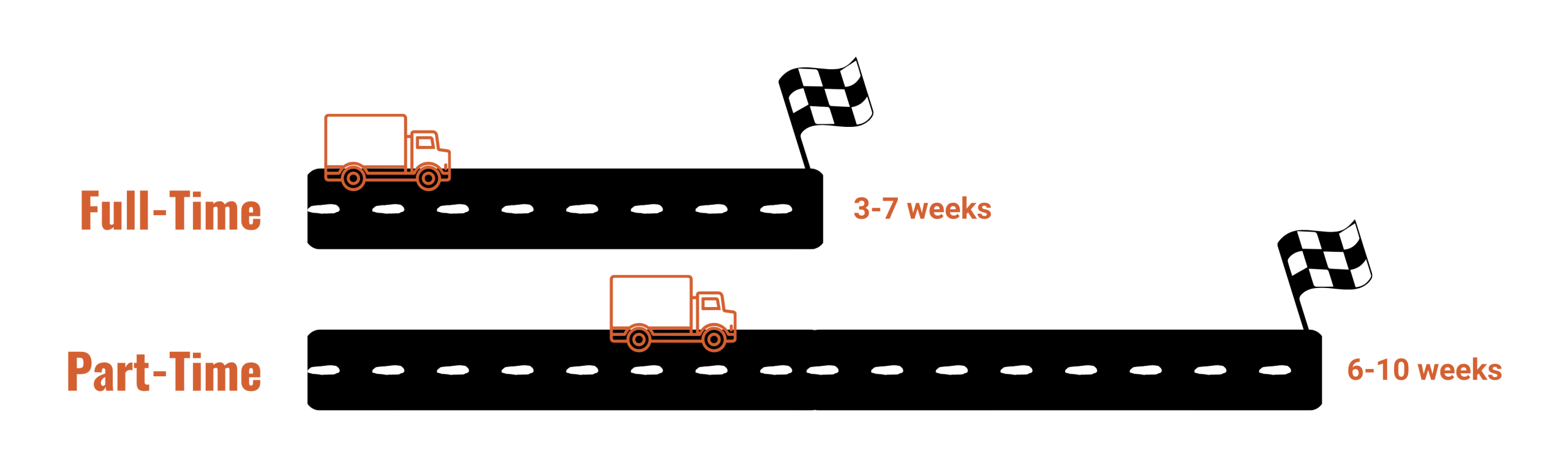
Full-Time CDL Training
Full-time CDL training is the fastest way into a trucking career, and it feels like it. Most students finish in about four weeks, training like it’s a full-time job. At Elite Truck School, full-time CDL training is from 7 a.m. to 3:30 p.m. five days a week, split between classroom instruction and time in the yard or on the road. Some more intensive programs push the day even further, running 11-hour sessions to hit the 160-hour requirement sooner, though most schools build in a lunch break that keeps real training time closer to 7 or 8 hours daily.
This pace works best if you can set aside a month to focus completely on training. The payoff is real: a one-month program can get you into a full, stable paycheck faster than almost any other skilled career. It’s also much faster than earning a two-to-four-year degree. The catch is that you’ll need a plan for covering expenses while you train, since this schedule doesn’t leave room for a job on the side.
Part-Time and Weekend CDL Training
Part-time and weekend programs exist for one reason: to let you keep your job while you train. You’ll earn the same certification and cover the same material as full-time students, just spread across a longer stretch of time. Weekend programs at Elite Truck School meet Saturdays and Sundays from 7 a.m. to 5 p.m., and most take about 10 weeks to complete the required 160 hours, though accelerated versions can shrink that to four to six weekends for students who also attend optional weeknight practice.
The trade-off is pace. Because part-time students often go several days between sessions, it’s easier to lose momentum or need to relearn a maneuver before moving forward. Students who make part-time training work usually plan their week ahead of time, make sure they’re getting enough rest, and stick to their schedule without letting things slide. They treat training like a separate commitment, not something to squeeze in around everything else.
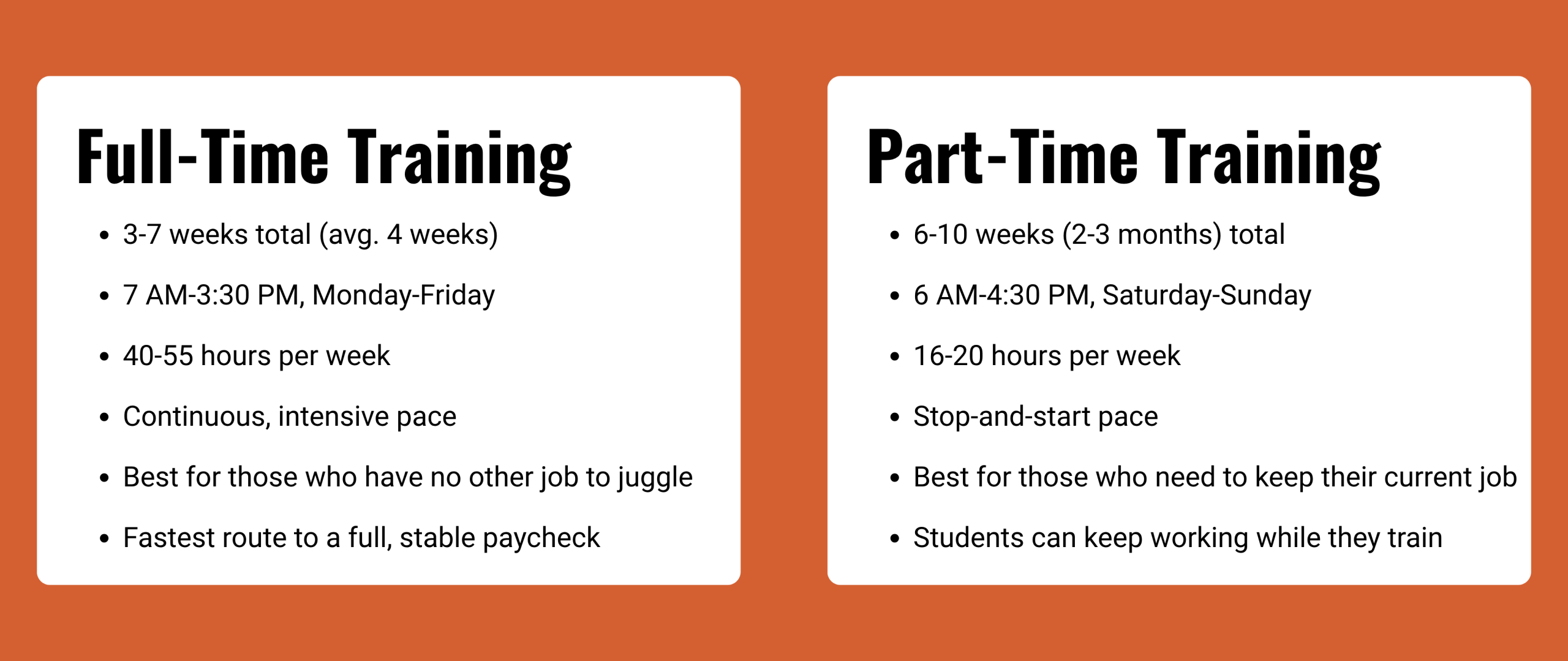
Full-Time vs. Part-Time: Side by Side
Here’s how the two paths compare on the factors that matter most when you’re choosing.
Numbers and schedules only tell part of the story. The real question is simpler: would you rather earn less for a few weeks, or wait longer to start earning more?
Which Schedule Should You Choose?
The right answer depends less on which path is “better” and more on what your life allows right now.
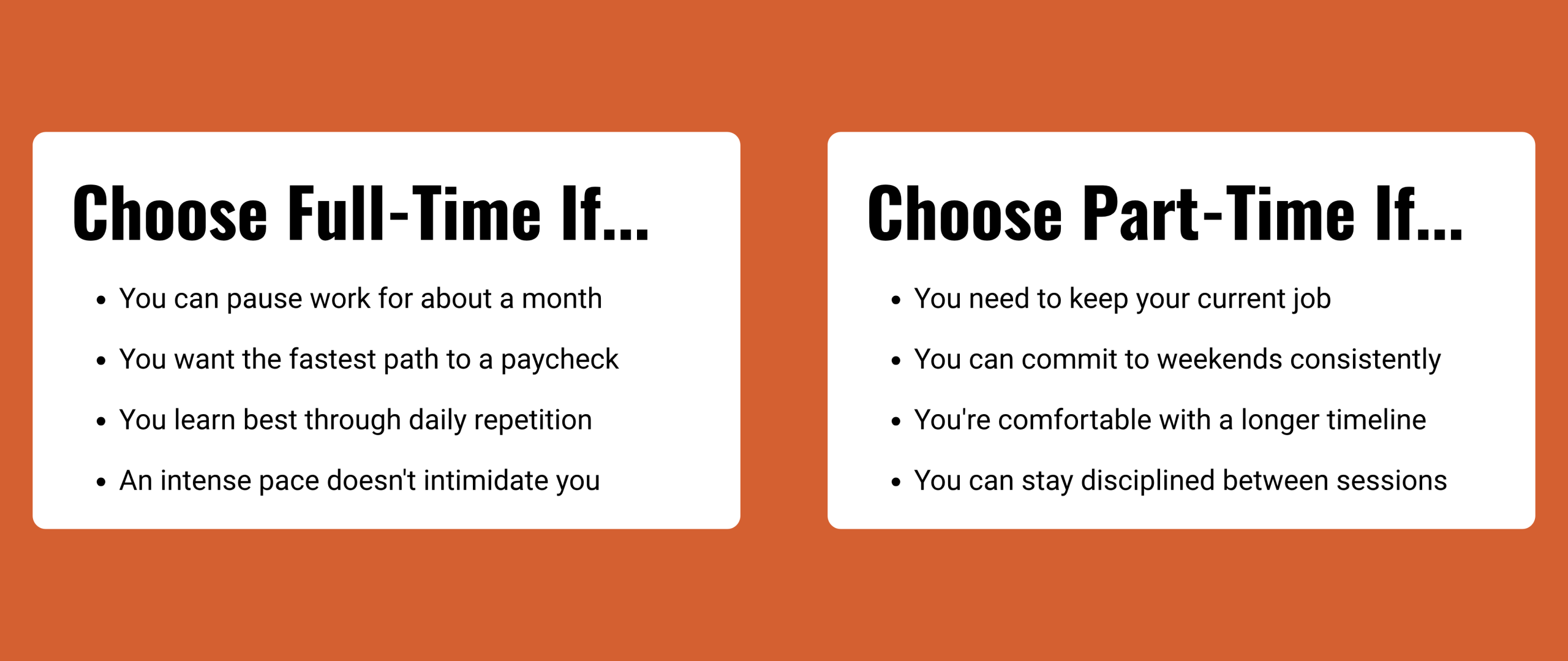
Whichever path you pick, you’ll meet the same federal requirements and earn the same CDL, backed by the same job placement assistance once you graduate.
