
Women in Trucking: Elite Instructor Nicole Shares Her Journey
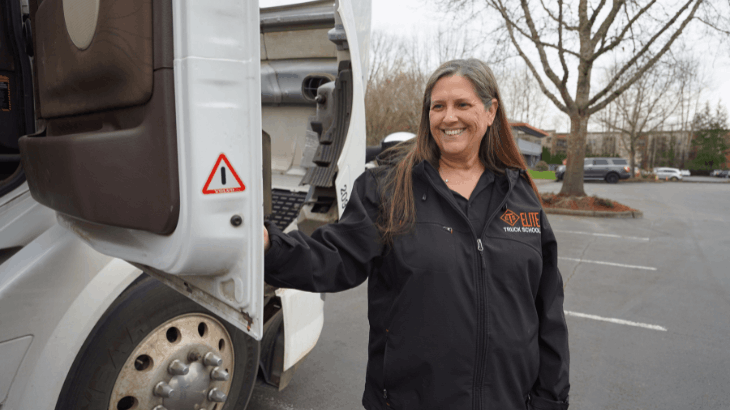

That was Nicole Hawks-Morse reaction when she realized the industry had taken her in, and 25 years later, she wouldn’t have it any other way. What started as a pivot from accounting landed her in dispatch, then in the passengers seat of a truck, and finally at the front of the classroom as an Instructor at Elite Truck School. Along the way, she became a respected voice in the trucking communities of Washington and Oregon, contributing to the state associations that shape the industry’s future.
Nicole’s journey proves that success in trucking comes from hard work, not gender. For women considering a career in professional truck driving, her path from office work to teaching the next generation of drivers is proof of what’s possible. Even when the road wasn’t one you planned to take.
Nicole’s Early Days: From Accounting to Trucking
Starting in a Trucking Company’s Accounting Department
Nicole found her way into trucking about 25 years ago through an entirely unexpected door. She took a job in the accounting department of a trucking company, until the day they decided to outsource that work. Rather than letting her go, they moved her to the reception desk. It was a far cry from the world of numbers she was used to.
Moving to Dispatch and Discovering the Industry
When a dispatch position opened up, Nicole saw her chance. And it was for one simple reason. “All I saw was more money,” she recalls. She applied, got the job, and quickly realized she was in brand-new territory. Routes, regulations, driver schedules, it was all unfamiliar ground. But instead of pulling back, she leaned in.
Learning from the Drivers Themselves
Nicole made a decision that would define the rest of her career. Since she lacked experience, she started riding along with the drivers. It was hands-on education no manual could replicate She learned load securement, delivery schedules, and the reality of life on the road. And somewhere along the way, she fell in love with the industry.
Misconceptions About Trucking that Surprised Her
Growing up, movies like Smoky and the Bandit shaped Nicole’s picture of trucking: caravans, CB radios, and rebels on the road. Her best friend’s dad drove trucks and was never home, which only reinforced those impressions. The reality was different. “They’re just normal people,” she says. “There are good people out there just making a good living for their family.” She also discovered just how much variety the industry offered. Whether local, regional, or over-the-road, options that fit different lives and different goals, nothing like what she’d seen on screen.
Breaking Barriers as a Woman in the Trucking Industry
Challenges of Being a Woman in a Male-Dominated Field
Twenty-five years ago, the trucking industry looked completely different. Women were rare, and those who did work in trucking were expected to be, in Nicole’s words, “rough, tough, and one of the guys.” Nicole came from accounting and dispatch, not exactly the mold the industry expected.
Working Hard to Gain Respect and Prove Herself
Respect didn’t come automatically. “I really had to work for it,” Nicole said plainly. She earned her place through education, dedication and willingness to put in more than what was asked. She rode with drivers, studied regulations, and built credibility one interaction at a time. Slowly, colleagues and drivers began to see her expertise rather than her gender.
How the Industry has Evolved for Women
The trucking world Nicole sees today is a fundamentally different place. Women now work as drivers, safety directors, trainers, and company owners. “Within the OTA, there are many women owners, which is fantastic,” she says. Those opportunities simply didn’t exist when she started. Nicole finds that shift genuinely exciting, and she’s helping drive it forward, one classroom at a time.
Building a Career in Safety and Training
Starting a Compliance Consulting Business
After leaving her first trucking company, Nicole discovers something she hadn’t planned on: she loved teaching. She launched her own compliance consulting business, going into companies and showing them how to stay compliant, pass audits, and run clean operations. The teaching part energized her. When a move across the state cost her that customer base, she transitioned back into direct safety work, but that pull toward education never left her.
Working with the Oregon Trucking Association
Nicole’s path eventually led her to the Oregon Trucking Association, initially through connections she’d built with the Washington Trucking Association years earlier. The two associations worked closely together, and she worked her way into a director of safety and training role at the OTA. She served as vice president of the Safety management Council, president of the Technology and Maintenance Council, a role she still holds, and currently sits on the OTA’s board of directors. Getting back in front of classrooms reminded her how much she loved it.
“I got back out in front of classrooms and taught and lectured, and I loved it.”
Becoming Director of Safety at Kool Pak
One day Nicole taught a class at Kool Pak, a refrigeration trucking company. They called her afterward with an opportunity she didn’t hesitate to take. “I’ve never turned down an opportunity,” she says, “You just never do, you never know where that opportunity will lie.” Seventeen years later, she was still there, serving as director of safety and maintenance, overseeing 80 drivers, 178 tractors, and 13-bay maintenance shop with a team that included both a maintenance manager and a compliance manager.
The Transition to Elite Truck School
When Kool Pak closed it’s doors in January 2025, Nicole found herself at an unexpected crossroads. She was a grandmother enjoying time with her three-year-old grand daughter and, after years of 24/7 safety work and middle-of-the-night calls, she wasn’t sure she was ready to go back.
“I was too young to retire, too old to start over,” she laughs.
Then she saw the Elite Truck School instructor posting and thought, maybe. She applied, and within three hours got the call and was interviewing the following day. The fit was obvious from the start, especially when Elite shared plans to develop a new safety program. Nicole was all in.
When you come to Elite Truck School, you work with instructors like Nicole who bring real-world experience to the classroom. We believe in providing high-quality training with professionals who understand the industry from every angle.
Teaching the Next Generation of Drivers
What a Typical Day Looks Like as an Instructor
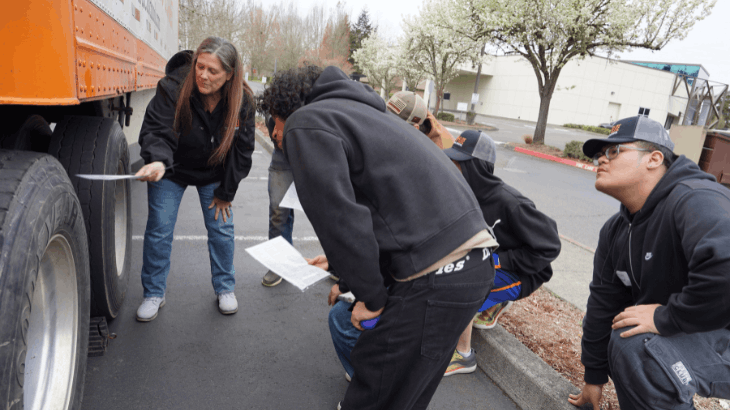
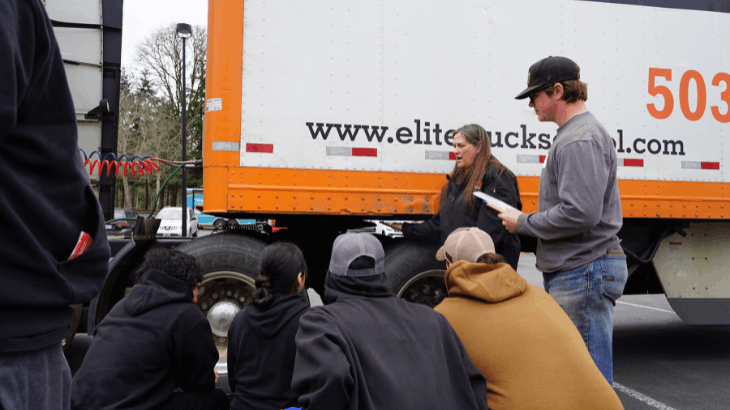
Nicole handles classroom training at our Vancouver campus, working with groups of five to twelve students. The first week focuses on preparing students for their permits: eight-hour sessions Monday through Wednesday, working through the manual and covering the theory required for their 160-hour program. Thursday brings permit tests, Friday covers HazMat and hours of service. Once that training is complete, Nicole gets two weeks for her own safety work before the cycle starts again.
Building Relationships with Students
For Nicole, the relationships she builds are what the work is really about. She knows her students by name, watches them progress through the entire program, and learns to read the room. “When they’re struggling, you can tell they’re struggling,” she says. “You can say, ‘hey, you need help’, you don’t have to wait for them to ask.”
When you come to Elite Truck School, you become part of a family. We work with students to provide the tools they need for success every step of the way.
Watching Student Confidence Grow
Students arrive on day one with a mix of excitement and uncertainty, some wondering what they’ve signed up for.
“The early weeks of training can be overwhelming, especially with concepts like double clutching coming up.”
But Nicole’s message is stead: relax, take it piece by piece, stay out of your own head.
“We will not let you fail,” she tells them. Three weeks later, the transformation is visible. Students who couldn’t imagine it are out there doing it, and they know it. “They just have this look of pride because they know they can do it,” Nicole says.
Small group sizes make sure every student gets the attention they need. That’s how we deliver the high-quality, personalized training that sets Elite graduates apart.
The Importance of Safety in Driver Training
Elite goes beyond minimum requirements, building real-life scenarios and safety training directly into the program. Nicole is passionate about this: “We don’t just train them to get their Class A. We add in real life. We add in safety. We give them more than what the 160-hour requirements are.” Getting drivers properly trained before bad habits form matters — not just for them, but for everyone on the road.
Advice for Anyone Considering Trucking as a Career
Nicole’s message is simple and direct: go for it. “If you bought it, a truck brought it,” she says. The industry needs skilled, dedicated drivers and it offers room to grow in ways people often don’t expect. Women especially have more opportunity now than at any point in the industry’s history. Instructors like Nicole are here to help make that path clear.
If you’re considering truck driving as a career, Nicole is ready to help you take that first step.
Conclusion
Nicole’s 25-year journey from an accounting desk to the front of a classroom at Elite Truck School is the kind of story the trucking industry needs more of. She didn’t plan on trucking. She didn’t fit the mold the industry expected of women at the time. But she worked hard, earned her place, and built a career that’s touched every corner of the industry. From compliance consulting to safety management, state association leadership, and to teaching the next generation of drivers.
The industry looks different now than it did when Nicole started, and she’s part of the reason why. Women in trucking work as drivers, safety directors, trainers, and company owners. Those paths are more open today than they’ve ever been.
At Elite Truck School, we work with you to provide the training you need to succeed. When you come to Elite, you become part of the family, and you learn from instructors who’ve lived the industry they’re teaching.